

10 SEPTEMBER 2025
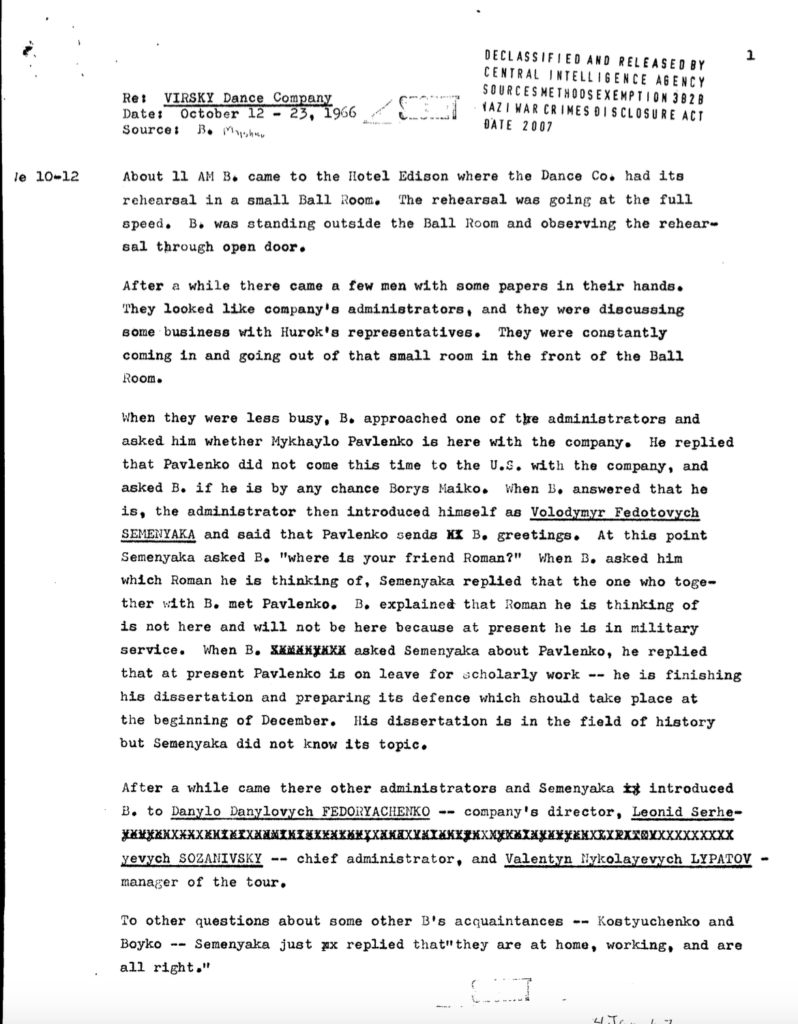
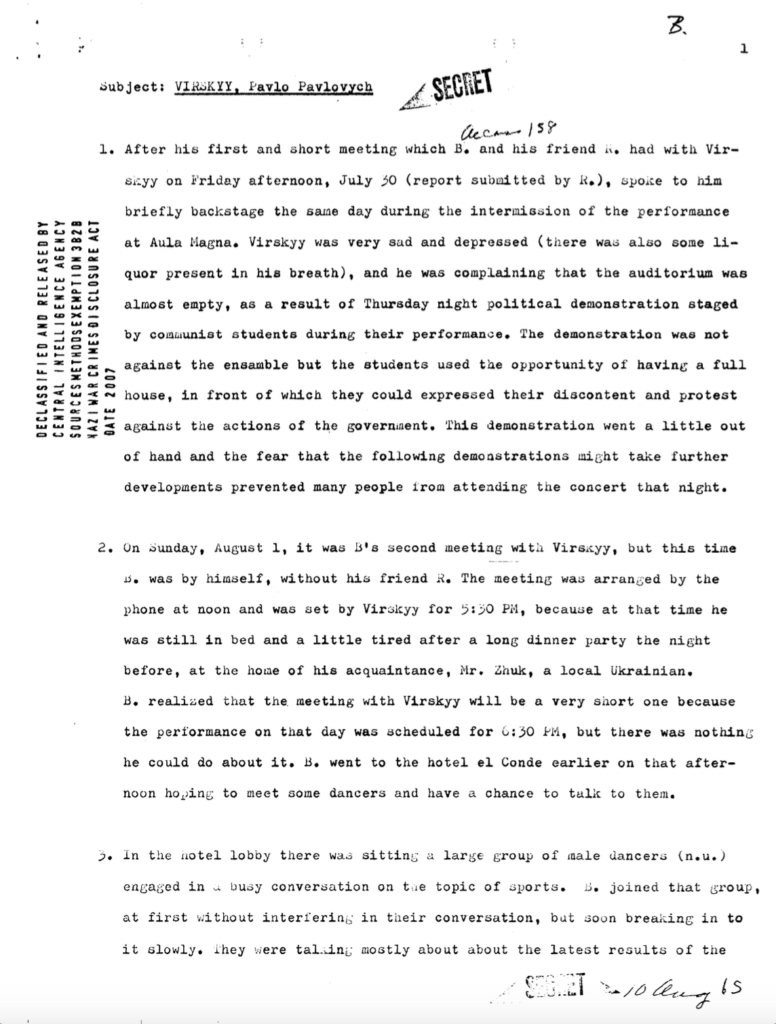
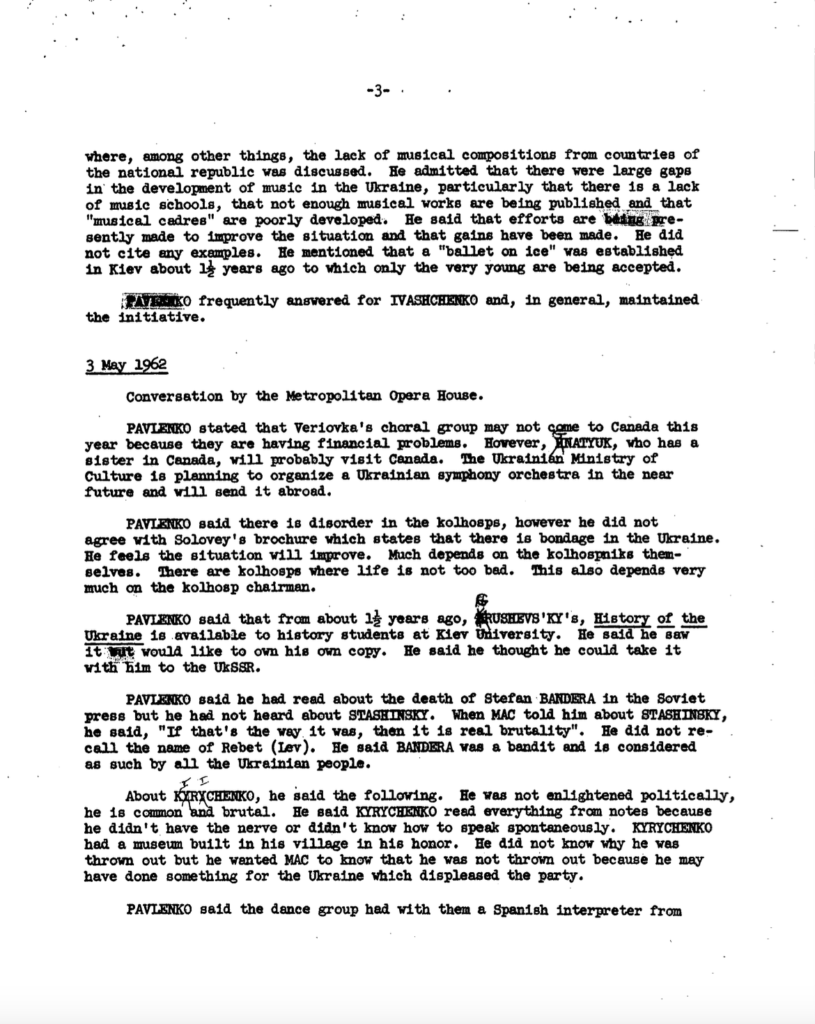
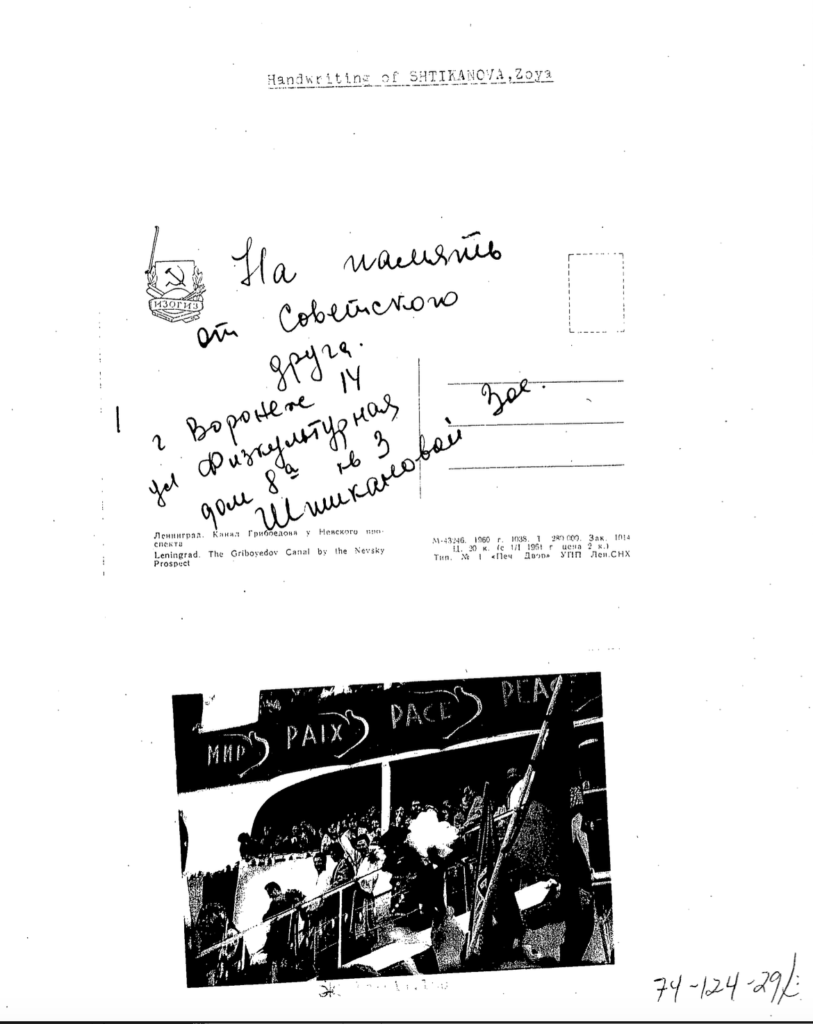
Working on our film about Pavlo Virsky, we discovered unique documents declassified in 2007 by the Central Intelligence Agency.
In them, his voice is preserved — short, sharp, at times bitter phrases that reveal his personality and the atmosphere of that era, reflecting the mindset of the Soviet intelligentsia: compromises, self-censorship, and a balancing act between sincerity and safety.
In essence, this is a “living portrait” of Pavlo Pavlovych Virsky in the mid-1960s, captured through the eyes of an émigré and recorded by security-service structures.
On the one hand, he shows a genuine interest in Ukrainian history and culture, asks for books by Hrushevsky, Yavornytsky, and Avramenko, values émigré cultural work, and looks for the journal Suchasnist. On the other hand, he is embedded in the Soviet system and forced to justify its restrictions: condemning “political add-ons” (as in the book Broken Strings), avoiding the topic of repression, and defending the party line.
This duality is a characteristic portrait of a Soviet intellectual, especially the head of a major ensemble: inwardly recognizing the value of Ukrainian culture, outwardly compelled to reject “dangerous” wording so as not to harm himself and his artists.
At the same time, Virsky is also a “bridge” between Ukraine and the diaspora. He clearly reaches for dialogue: he accepts books, agrees on the need for cultural exchange, and recognizes alienation between Ukraine and the émigré community as a problem. Yet at the same time, he feels hurt: “I wasn’t congratulated on my birthday,” “they don’t value us, they picket us.” This reveals his personal vulnerability and need for recognition.
His political judgments are cautious. He speaks loyally about party leaders, avoiding deeper engagement with sensitive topics. For him, the diaspora is both an adversary and a potential ally.
The value of this document lies in the fact that it:
— shows Virsky outside official rhetoric — in private conversations, with humor, resentments, and sympathies;
— records what he read, his circle of interests, and his attitude toward books and authors;
— provides rare testimony of how Soviet artists interacted with the diaspora under KGB surveillance.
His words:
— “This book could have stood on my desk. But this subtitle makes that impossible.”
— “The further we go, the more alienated we become from one another.”
— “I was proud and told my friends that Ukrainians abroad would congratulate me. But I was wrong.”
— “The invasion of Czechoslovakia complicated all of Europe for us. I was afraid the Paris tour would be canceled.”
— “Sobor caused an uproar. The book was withdrawn from sale, but not a single copy was burned. A new edition is being prepared: either Honchar will make changes himself, or they will be cut out.”
— “Now is not the time for interviews.”
— “A brother should greet a brother the way a Ukrainian greets a Ukrainian.”
— “We broke the ice.”
These testimonies will become part of the new version of the film.
We will show Pavlo Virsky not only as the creator of the ensemble and a genius of dance, but also as a person who had to live and speak in an era where every word had its price.
#PavloVirsky #Virsky #ecgproductionscanada #UkrainianDance #UkrainianCulture #HistoryOfUkraine #Declassified #ColdWarHistory #SovietUnion #KGB #ArtAndFreedom #UkrainianDiaspora #DanceLegend #HiddenHistory